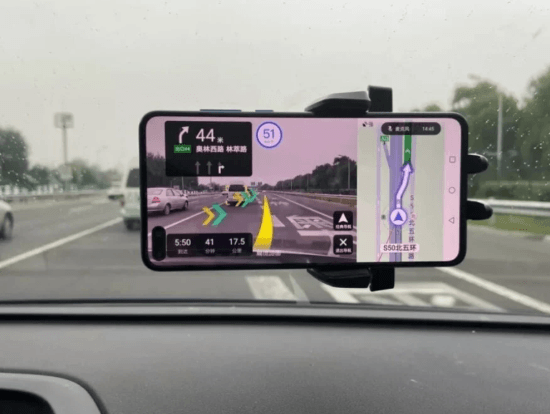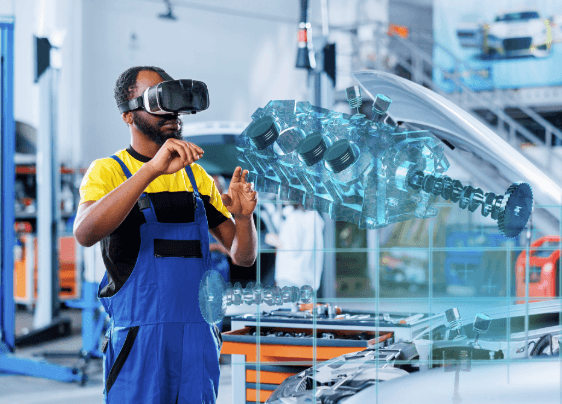
AR in industrial design and engineering blends virtual prototypes with real contexts to support in situ exploration and rapid iteration of form, fit, and function. It unifies cross-disciplinary insight, preserves traceability, and documents decisions transparently. The approach enables real-world validation, collaborative review, and improved prototyping fidelity, while integrating digital twins for pre-manufacture checks. A strategic roadmap balances exploratory work with disciplined feedback loops, prompting ongoing alignment across design, validation, and production planning.
How AR Transforms Industrial Design Workflows
Augmented reality (AR) reshapes industrial design workflows by integrating virtual prototypes with real-world contexts, enabling designers to iteratively explore form, fit, and function in situ.
The approach unifies cross-disciplinary insight, reducing cycle times and misalignment.
Teams document decisions through transparent design communication, preserving traceability while enabling rapid stakeholder feedback.
Practitioners leverage AR to validate constraints, optimize manufacturability, and sustain adaptable, market-responsive design workflows.
Selecting AR Technologies for Engineering Validation
The evaluation prioritizes prototyping accuracy and reproducibility, balancing hardware-software integration with workflow fit.
Decisions aim to maximize collaboration efficiency across disciplines, ensuring verifiable results, scalable validation, and clear documentation while maintaining principled freedom to adapt tools to project needs.
Real-World AR Use Cases That Drive Measurable Gains
Real-world AR deployments in industrial design and engineering are driven by tangible performance improvements across workflows, from design validation to field operations.
Practical use cases include augmented prototyping for rapid concept iteration and digital twin validation to ensure fidelity before manufacture.
Benefits span reduced cycle times, cost-effective testing, and safer field rehearsals, enabling interdisciplinary teams to pursue informed, freedom-enabled experimentation.
Implementing an AR-Powered Product Development Roadmap
An AR-powered product development roadmap integrates augmented reality across design, validation, and production planning to align cross-functional teams and accelerate decision cycles. The approach emphasizes ideation prototyping to converge concepts early, while visualization validation ensures fidelity before hardware commitments. Practitioners implement staged milestones, integrate data streams, and maintain iterative feedback loops, enabling autonomous teams to balance experimentation with rigorous discipline and freedom to innovate.
Frequently Asked Questions
How Does AR Impact IP Protection in Industrial Design?
AR IP implications arise from protective thresholds and access control, while design data ownership hinges on provenance, licensing, and non-disclosure rigor; stakeholders evaluate liability, trade secrets, and interoperability, enabling freedom with disciplined governance and cross-disciplinary collaboration in design workflows.
What ARe the Hidden Costs of AR Deployment at Scale?
Ironically, hidden costs emerge even before scale deployment, as infrastructure, training, maintenance, and data governance intensify. The analysis is pragmatic and interdisciplinary, detailing operational burdens, security, and interoperability for an audience pursuing freedom with scalable AR investments.
How Is Data Security Managed in Collaborative AR Sessions?
Data security in collaborative AR sessions relies on robust user authentication and data sovereignty controls, enforcing access policies across devices and networks, logging activities, and applying encryption; interdisciplinary teams ensure compliant governance, risk assessment, and user-centric yet freedom-preserving safeguards.
Can AR Replace Physical Prototyping Entirely?
AR cannot fully replace physical prototyping; it complements it. It improves prototype fidelity during early testing, but hardware integration and tangible cues remain essential for final validation and risk assessment in multidisciplinary design workflows.
See also: thebloxstrapcom
What Metrics Indicate AR ROI Beyond Time Savings?
AR adoption metrics and ROI profiling indicate value beyond time savings, including defect reduction, design-cycle acceleration, knowledge transfer effectiveness, supply-chain responsiveness, and safety improvements, when interdisciplinary teams measure net benefits, cost-of-ownership, and strategic alignment with freedom-seeking goals.
Conclusion
AR engineers the bridge between concept and reality, threading virtual prototypes into physical contexts to validate form, fit, and function in real time. By standardizing traceability and fostering cross-disciplinary collaboration, it accelerates decision cycles without sacrificing rigor. The roadmap ensures disciplined iteration alongside exploratory leverage, balancing digital twins with tangible validation. In short, AR is the wind at the back of industrial design—pushing projects forward while keeping feet firmly planted in validation and production realities.