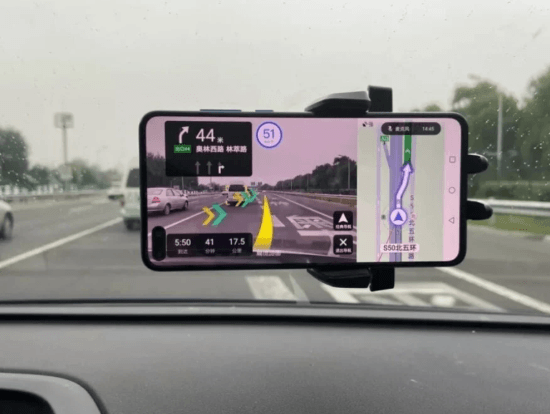
AR in navigation and mapping treats overlays as environment-anchored objects, not screen artifacts. It combines sensor fusion, pose estimation, and modular pipelines to keep routes and landmarks spatially consistent. Real-time calibration and parallel processing enable persistent guidance across devices and scenes. Privacy, safety, and governance constrain data flows while data schemas enable scalable workflows from daily commutes to industrial planning. The framework invites deeper examination of how these systems align with real-world constraints and future challenges.
How AR Reframes Navigation: Core Concepts
AR technologies reframe navigation by overlaying digital guidance onto the real world, enabling users to perceive routes and landmarks as spatially anchored, interactive elements. The system delivers concrete visualization of paths, nodes, and constraints, decoupling interpretation from device-centric screens.
Real time localization locks position, while environment-anchored cues respond to motion, optimizing independence and freedom with systematic, code-driven spatial reasoning.
AR Mapping Tech Behind the Magic
In this section, the mechanics of AR mapping are laid out with a code-centric lens: sensor fusion, feature extraction, and spatial anchoring converge to produce stable, environment-locked overlays.
The approach emphasizes modular pipelines, real-time calibration, and deterministic updates.
Augmented accuracy emerges from tight loop timing and robust pose estimation, while mapping latency is minimized through parallel processing and adaptive keyframe strategies.
Use Cases: Everyday Guidance to Industrial Planning
Use cases span from on-the-ground daily navigation to large-scale facility planning, where spatially anchored overlays guide user actions and decision workflows.
The narrative remains code-focused and spatially driven, detailing modular workflows, data schemas, and real-time feedback loops.
Dense aesthetics inform interface layering while ethical implications frame stakeholder responsibilities, ensuring freedom of inquiry, transparent provenance, and disciplined, objective mapping across varied industrial contexts.
Challenges, Privacy, and Safety in AR Maps
What are the principal constraints shaping AR maps when deployed in real environments, and how do they influence risk profiles, privacy parameters, and safety controls? The analysis proceeds with a code-like, spatially driven method: data streams, sensor fusion, localization fidelity, occlusion handling, and mapping latency. privacy concerns, data governance, threat modeling, and governance controls inform robust, auditable safety and access patterns.
Frequently Asked Questions
How Do AR Maps Handle Multi-Floor Navigation in Real Time?
Multi floor navigation is managed via real time fusion of SLAM, map layers, and indoor positioning. The system switches floors with spatial anchors, updates routes on-the-fly, and renders seamless 3D guidance, preserving freedom while maintaining code-driven, deterministic behavior.
Can AR Navigation Work Offline Without Connectivity?
Offline navigation is possible with preloaded maps; algorithms run locally. It remains constrained by stored data size. Map data privacy is preserved when tiles and requests stay on device, while user freedom persists in isolated environments.
What Are the Accessibility Implications of Ar-Based Guidance?
Accessibility implications include heightened inclusivity and safety, but irony underscores reliance on devices: usability must be universal. The system emphasizes accessibility usability, inclusivity safety, with code-like precision, spatial reasoning, and a freedom-seeking, device-agnostic approach.
How Is User Trust Built in AR Navigation Recommendations?
Trust calibration governs how AR navigation recommendations are perceived, with explicit privacy considerations shaping user acceptance; system logs, transparent data use, and reproducible spatial cues foster confidence while preserving autonomy and freedom in exploration.
See also: AR in Marketing and Customer Experience
What Standards Govern AR Data Interoperability Across Apps?
Exaggeratedly, standards govern AR data interoperability: data formats align via open schemas, while privacy compliance remains mandatory across apps, ensuring consistent, programmable spatial interoperability and freedom-driven integration without vendor lock-in.
Conclusion
AR reshapes navigation by anchoring overlays to the real world through robust pose estimation and modular pipelines. The system fuses sensors, extracts features, and maintains persistent, environment-anchored guidance across frames. Spatial reasoning and real-time calibration keep routes, landmarks, and constraints aligned as user position evolves. Like a map that breathes with surroundings, it translates complex spatial data into actionable cues. A code-driven, layer-by-layer workflow ensures reliability, privacy, and safety across everyday routes to industrial planning.